
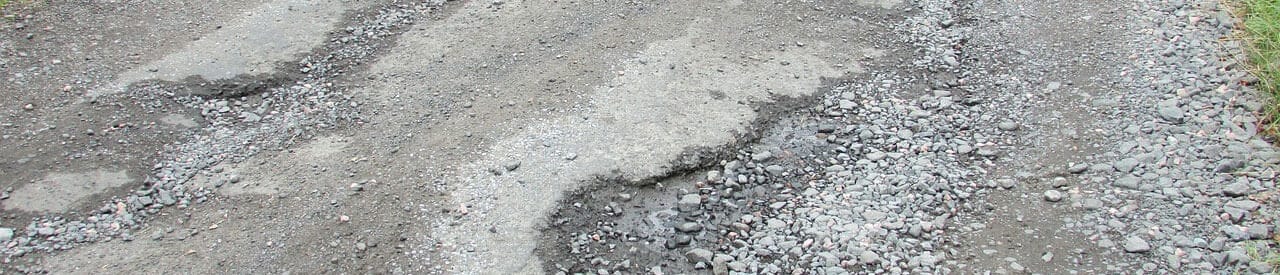

Equity Release with Unadopted or Unmade Roads in Good Condition
In 2026, later life lending, such as equity release, continues to evolve and change.
Despite this, one issue still raises questions for homeowners and their families and that question is whether or not you can secure equity release if your property sits on an unadopted or unmade road?
The short answer is yes, although this does depend on the specific circumstances. In fact, whether or not you will be able to release equity from your home depends heavily on what your surveyor says.
For lenders who want to release equity from their home, equity release is not simply about the value of the property. In fact, equity release and lenders are more concerned with the property’s long-term saleability.
This is because a lifetime equity release plan may last decades and when the borrower passes away or moves into long-term care, the property must be sold in order to repay the equity release loan.
If the road leading to the house is privately maintained or unadopted by the local authority, then lenders look very closely at the practical implications that this might have on the value of the property.
At Equity Release Warehouse, we understand that equity release applications involving unadopted roads are assessed individually by each lender. Much like recovery from addiction, detox, or rehab, there is rarely a single rule that fits everyone.
When it comes down to an equity release application, evidence, condition and risk all come into play.
This article explores how equity release lenders view properties on unadopted roads in good condition, what surveyors look for and how you might be able to improve your chances of securing a lifetime mortgage if your property is near an unadopted or unmade road.
What Is an Unadopted or Unmade Road?
If you are considering releasing equity from your home, then it is important to understand how equity release works and exactly what an unadopted or unmade road is.
An unadopted road is one that has not been taken over by the local council for maintenance. This means that the responsibility for it usually lies with residents or a management company.
Alternatively, an unmade road refers to a surface that may not be fully tarmacked or constructed to local authority standards. This means that it might consist of gravel, stone, or older tarmac that was never formally adopted [1].
It is important to understand that the term ‘unadopted’ does not automatically mean that the road is in poor condition.
In fact, many private roads are very well maintained, quiet, and highly desirable although the issue for lenders is not how it looks, but liability, responsibility and saleability of the property.
Remember, your equity release loan will need to be repaid once you pass away or move into a care home. Once this is done, your property will be sold and the proceeds from the sale of the home will pay off the loan, including any interest.
Hopefully, this will cover the full loan amount. If it does not, then your lender will step in to pay the difference as part of the no negative equity guarantee.
This is why lenders want to be sure that your home will sell for a good amount, so that they do not have to step in and pay the difference. Things such as an unmade or unadopted road might put this at risk. We discuss and explain this in more detail below.
Why do Lenders Care So Much?
Equity release providers and lenders will lend you an amount against the value of your home. When it comes to a lifetime mortgage, you will be charged interest.
This interest compounds over time which means that the final repayment is typically a lot more. This happens when the homeowner dies or moves into a care home.
Because the lender may not be repaid for many years, they must be confident that the property will remain saleable and that there will be no issues or legal disputes when you come to sell.
Likewise, they want to be sure that buyers will not be put off by messy maintenance arrangements with unmade or unadopted roads.
If a property is near an unadopted or unmade road, then the lenders will worry that the road will deteriorate even further, that there will be disputes between neighbours, that there is a lack of formal maintenance agreements and that the legal access rights are not being followed and documented.
The Surveyor’s Role When it Comes to Equity Release
In reality, most equity release applications involving unadopted roads come down to the surveyor’s report.
During your equity release application, the surveyor will assess the physical condition of the road in question, the ease of vehicle access, the drainage and surface quality as well as market demand in the local area.
They will also need to see other evidence of regular maintenance that has been carried out on the road.
If the road in question is in good condition, is well maintained and the properties in the area sell above market value without any issues, then the lender may be comfortable proceeding with your equity release application.
However, if the surveyor notes any issues, any uncertainty, potential disputes, or visible deterioration of the road then your equity release application may become more complicated.
This is why it is important to understand that each equity release application will be examined on a case by case basis.
As stated above, the condition of the road is incredibly important when it comes to your equity release application.
It is important to understand that there is a huge difference between simply a muddy track with no formal road structure and a well kept road with shared ownership and agreements.
If the road is surfaced, drained properly and clearly maintained by local residents, then lenders are far more likely to consider your equity release application.
There are a number of things that you should consider and think about when considering whether or not to apply for equity release. Some of these are listed below for you.
- Written maintenance agreements
- Regular financial contributions to the maintenance of the road
- A sinking fund for repairs to the road
- Clear legal rights of access in the title deeds for the road
If you do not have these in place, then you might want to consider putting these things in place either before or whilst you apply for an equity release loan, to make the process as smooth and as simple as it can for you.
Legal Access: A Critical Requirement
When it comes to equity release, there is one non-negotiable element and that is that the road needs to have legal access. This means that the property must have documented right of way across the road. If access is informal or not legally clear, then lenders may decline your application to release equity.
When you apply for equity release, your equity release solicitor will review the title deeds of your home, the land registry agreement, any easements or covenants.
Without formal access rights to the road, the property can become difficult to sell, which is precisely what lenders seek to avoid. If you do not have these in place, then you might want to think about putting them in place
How Much Equity Can You Release?
If you get approved for equity release, then the amount you can release will depend on a number of different factors, including your age, the value of the property, the lender’s criteria, the condition of the road your property is on and the overall risk associated with your property and applications [2].
It is important to understand that lenders do vary, meaning that not all lenders approve loan applications based on the same circumstances.
Some lenders might offer a reduced loan-to-value percentage or ratio, some might offer different interest rates and others might request additional legal checks before they are happy to approve you for an equity release loan.
If your property is on an unadopted road, then it does not automatically mean that you will not qualify for an equity release loan. It simply adds another layer of complexity to your equity release loan application.
When Lenders Decline Some Applications
There are a number of different general reasons why some lenders might decline an equity release application. In fact, applications might be declined due to poor credit history, the fact that the property is not in good enough condition, or that the property simply is not valued highly enough.
Surveyors will carry out a thorough search of the property and of the surrounding properties and area to ensure that the property is structurally okay and that it is valued at what the homeowner and lender believe it to be valued at.
In some situations, some specialist lenders may consider applications where mainstream lenders decline the application.
However, all lenders are very aware that being cautious is essential and any advice that you receive from an equity release adviser should be impartial and very thorough.
How to Improve Your Chances of Getting Approved for Equity Release
If your home sits on an unadopted or unmade road that is in good condition, then there are a number of different things that you can do to improve your chances of getting approved for an equity release loan.
- Gather your documentation such as the deeds to your property
- Clarify access rights to the road that the property is on
- Demonstrate the maintenance agreement on the property
- Speak to your neighbours
- Prepare for the survey to take place
By doing the above steps, it is not guaranteed that you will get approved for an equity release loan. However, it will most likely improve your chances of being considered.
Emotional Considerations When It Comes to Equity Release
Equity release can be an incredibly stressful period. In fact, equity release applications are often pursued during emotionally sensitive periods, such as a death in the family.
Some homeowners seek funds to repay their mortgage, support a loved one, fund any home improvements, cover care costs to pay off their debts.
It is important to understand that later life lending such as equity release should not be rushed or done in haste. When it comes to any type of loan, independent financial advice is highly important and you should discuss your plans with your family in detail.
Lifetime Mortgages vs Home Reversion Plans
When it comes to equity release, it is important to understand the difference between lifetime mortgages and home reversion plans. Although most equity release plans are lifetime mortgages, home reversion plans are still very common [3].
When it comes to a lifetime mortgage, you remain the sole owner of the property until you pass away or move into a care home.
You will be charged interest, which will compound over time and need to be repaid once you pass away along with the initial loan amount.
When it comes to a home reversion plan, you sell a percentage of your property in exchange for access to the equity inside your time [3].
Why do Family Conversations Matter?
When it comes to equity release, it is important that you discuss the ins and outs of your loan and your plans with your family. This is because equity release affects inheritance, which impacts your next of kin.
When telling your loved one of your plans, you should discuss the impact your plans will have on their inheritance, the future saleability of the property and the responsibility to maintain the property so that it holds value.
Conclusion
When it comes to equity release, releasing equity with an unadopted or unmade road in good condition is entirely possible, although it is never guaranteed.
When it comes to your application, there are a number of things that your lender will consider including the survey findings, the value of your property, the legal clarity and the condition of the home.
If you are considering applying for equity release and your property sits on a private road, then you should try to gather your documentation as early as you can, speak to a qualified equity release adviser and approach the equity release process calmly.
A well-maintained unadopted or unmade road does not automatically mean that you will not qualify for equity release. With the right things in place and realistic expectations, many homeowners successfully secure lifetime mortgages despite initial concerns from lenders.
To speak to a member of the team at Equity Release Warehouse, then speak to a member of our team for free on 0330 058 1579 or by visiting us online by searching for www.equityreleasewarehouse.com.
References
[1] https://commonslibrary.parliament.uk/research-briefings/sn00402/
[2] https://nationaldebtline.org/get-information/guides/equity-release-ew/
[3] https://www.equityreleasecouncil.com/what-is-equity-release/home-reversion/